
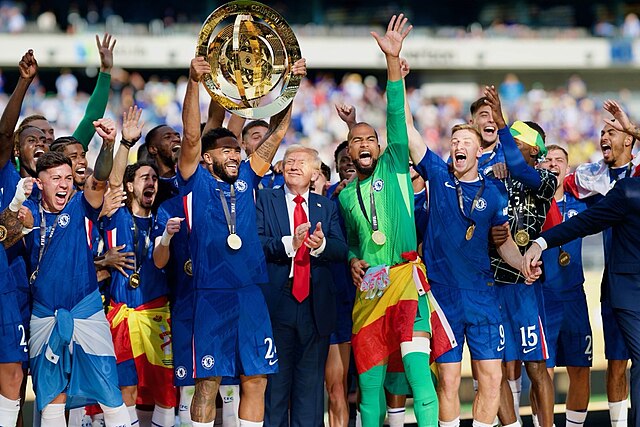
Photo Credit: The White House
The long anticipated Club World Cup kicked off in July 2025, with Chelsea FC becoming the first world champions with the new tournament style. On paper the tournament was a global spectacle with 32 teams competing in the USA from places from Tunis to Auckland. The tournament holds large significance as it looks to push money within football from primarily European teams to teams across the world, hoping for development increases all across the globe.
The tournament had all the features of FIFA’s ambitions. Showing the world it’s global influence and money with key new additions to the sport such as a newer more automated VAR system, referee’s having their calls mic’d up and even a half time show seeing the success amongst the NFL.
Now the final whistle has been blown can we look at the first Club World Cup as a success? If so who has been positively affected by it the most?
From the surface level if we look at the statistics surrounding the tournament, it’s reported over 2.4 million tickets were sold for the cup, with substantial global viewership, despite the reduction of ticket prices prior to the games within the group stage as they undersold on release it still can be looked at as positive viewing figures.
The U.S.A is one of the three hosts of the FIFA World Cup in 2026 so the importance of gaining substantial viewing numbers within the country prior to the much larger tournament was high. This being said the Club World Cup came across as a commercial triumph from a broadcasting perspective for the U.S. as their steady growth within the sport continues around the country.
This perspective shows much success especially with the final seeing Chelsea’s 3–0 win over PSG give FIFA exactly what it wanted; a marquee final, a packed sold out stadium, and a marketable headline.
But this tournament was not just about football and selling tickets to a new market within North America. It was a soft power movement from FIFA. The tournament directly affects the European footballing calendar with FIFA making sufficient changes to the usual transfer market showing power.
From this we can see FIFA’s move to not just be a regulator amongst football but a rival to UEFA as they increasingly monopolise the sport.
Club Tournament Comparison: Viewership vs Revenue
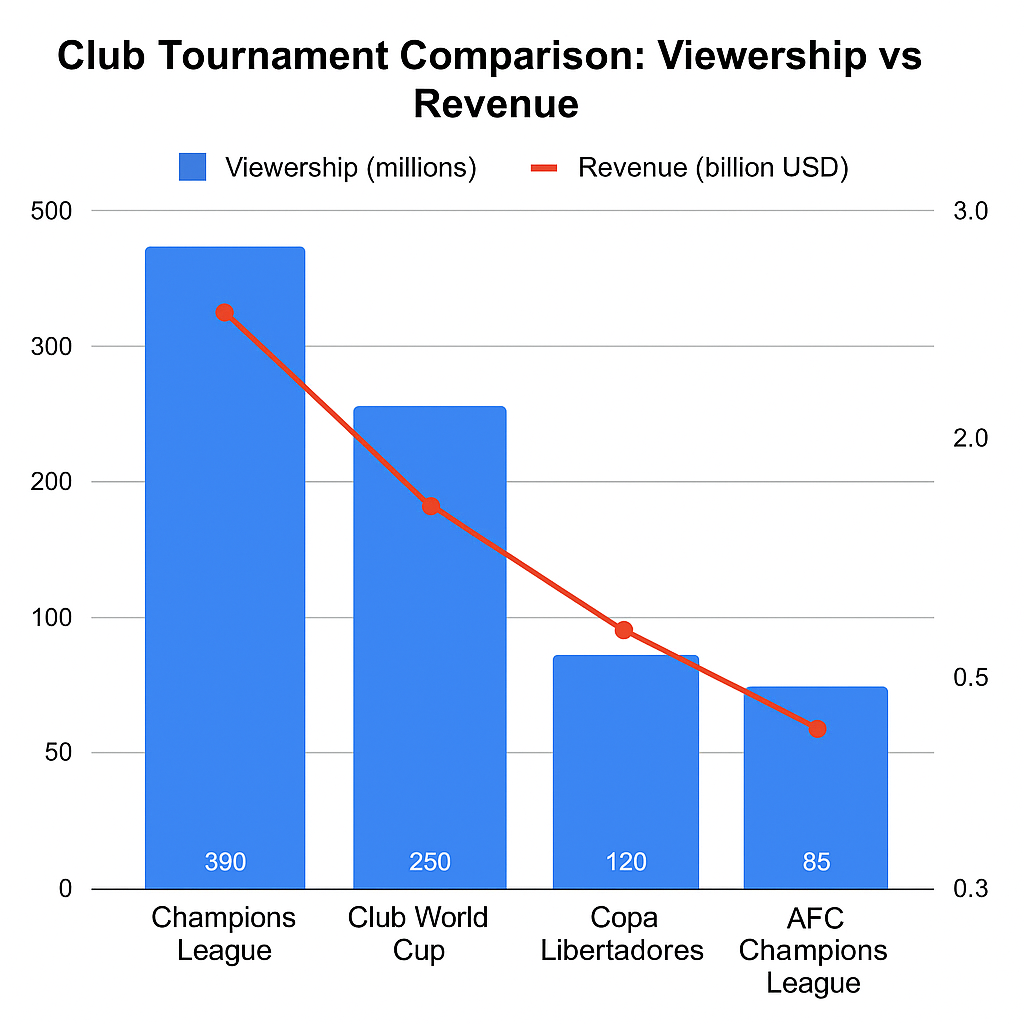
Chart showing estimated global viewership and revenue for major club tournaments in 2025. Source: FIFA, UEFA, DAZN estimates.
(The graph looks to show a conservative estimate on unique viewership not total streams, this was used rather than the total as UEFA doesn’t report on cumulative streams.)
The selection of the U.S. being the selected host wasn’t coincidence FIFA has its eyes firmly set on the U.S. not just for the 2026 Men’s World Cup, but as the next big frontier for football. With American owners pouring money into European clubs, this tournament felt like a calculated step to tighten those ties and cash in on the ‘soccer buzz’ as it grows.
Looking into the individual football clubs and whether it was successful for them we can see much success for a few teams like Al Ahly as they reached the quarter-finals and Fluminense reaching the semi-finals, but if this tournament was action to have strong teams competing from all over the world it wasn’t, the European teams dominated as from the quarter-finals onwards only three games included a team who wasn’t European. By the end it was just European teams chasing a new trophy to add.
So, yes the Club World Cup was a success like many other modern large events. Economically and politically successful even with the structural inequalities for the non-European teams.
For fans? Some welcomed the diversity of competition. Others saw it as another bloated addition to an already exhausting calendar, some going as far as not recognising it and labelling it as a friendly tournament.
Whether it’s liked or not, the Club World Cup may be here to stay. And with it, a new era of football one less about the clubs and fans but more about the money.



Leave a Reply